
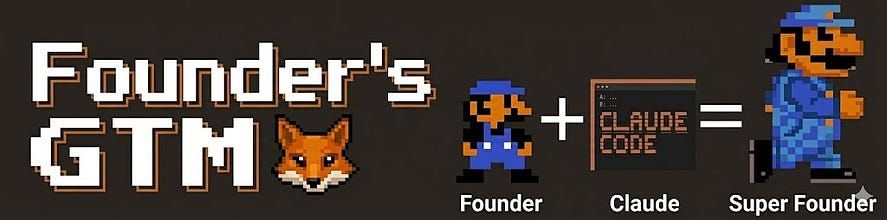


Here are my 5 pieces from the past weeks, including:
A skill that wrote a cold email live on air.
An AI model that can’t write a word.
A $158,500 job that’s changing as we speak.
Different tools, but the same pattern: the tool only got good once someone decided what good looks like.
Here’s what each one taught me, and who it’s for.
1. This Claude Skill Writes Emails That Book Meetings
Only 5% of sellers research every prospect. Researched emails get double the replies.
THE FINDING: people skip research because it takes 10 minutes per prospect. Get that down to 2, and they stop skipping it.
Read this if your emails sound fine, but your reply rate says otherwise.
Inside: the skill that does the research and writes 3 emails per prospect.

2. Watch This Claude Email Skill in Action
I built that skill live on the Instantly Daily Show, on a market I’d never touched. The host played the prospect.
THE FINDING: he reads cold emails for a living, and said he’d almost have to reply to this one. The AI didn’t get smarter on air. The skill just did the research first.
Read this if you want to see the method work before you trust it.
Inside: the recording, and how to load the skill’s emails into Smartlead at scale.

3. Two Engines You Need To Grow on LinkedIn
You post 3 times a week and get 5 likes, mostly from peers. Or you send requests every day, and half get ignored.
THE FINDING: posts and DMs feed each other. Start a conversation with a buyer, and LinkedIn shows them your next posts more often. And their questions in your DMs become your next posts.
Read this if you only post, or only reach out.
Inside: the prompt that turns your DMs into posts, plus the order to set up the outbound side: intent, requests, replies, meetings.

4. WTF is Jev?
Everyone in GTM is talking about an AI model that can’t write a word.
It only decides: yes or no, or a score from 2 to 10.
THE FINDING: it’s fast and cheap, but its confidence needs watching. In one test, it changed a quarter of its answers on reruns, and felt surer about the new ones.
Read this if you sort hundreds of leads a month by hand.
Inside: the jev-score skill, and how to set it up in under an hour.

5. Do You Need a GTME? (2027 Preview)
3,000+ open GTM Engineer jobs. A $158,500 median salary. Only a third get filled within 90 days.
THE FINDING: agents now do the clicking. So the job turns into managing the agents: writing their instructions, deciding who does what, and checking the work.
Read this before you post a job ad for a GTM Engineer.
Inside: the 2027 hiring plan, and the prompt that builds yours.

BONUS: which one to read first
Not sure where to start? Run this. It tells you your weakest spot, and which piece fixes it.
Work out which gap in my GTM setup matters most right now,
and which article I should read first.

## STEP 1: ASK ME
Ask me these five questions in one message. Short answers
are fine.

1. Do I research each prospect before I reach out, or do
   I skip it because there's no time?
2. Have I ever seen a researched email get written, start
   to finish, for a market I don't know?
3. On LinkedIn, do I post AND reach out, or only one?
4. Do I sort my leads by hand, by gut, or not at all?
5. Am I planning to hire for GTM in the next 12 months?

## STEP 2: NAME THE ONE GAP
Tell me which single area is weakest, in one sentence.
Be direct. Don't list three.

## STEP 3: SEND ME TO THE RIGHT PIECE
- Weak on 1 → "This Claude Skill Writes Emails That Book
  Meetings"
- Weak on 2 → "Watch This Claude Email Skill in Action"
- Weak on 3 → "Two Engines You Need To Grow on LinkedIn"
- Weak on 4 → "WTF is Jev?"
- Weak on 5 → "Do You Need a GTME? (2027 Preview)"

Give me the title, and one line on what it fixes.
Takeaway
5 pieces, and each one comes back to a decision that’s still yours.
The skill writes the emails, once you’ve decided who’s worth emailing.
Jev sorts the list, once you’ve told it what a good lead looks like.
The agents do the clicking, once someone decides what they’re allowed to touch.
The tools keep getting faster. The deciding is still your job.
PS: Still a free subscriber? Premium subscribers get:
