

In part 2 of this GTM build report, we built the list: 2,678 brands to start, then a wider net once we ran the maths.
Now the harder question:
What do you say to brands that get pitched every single day?
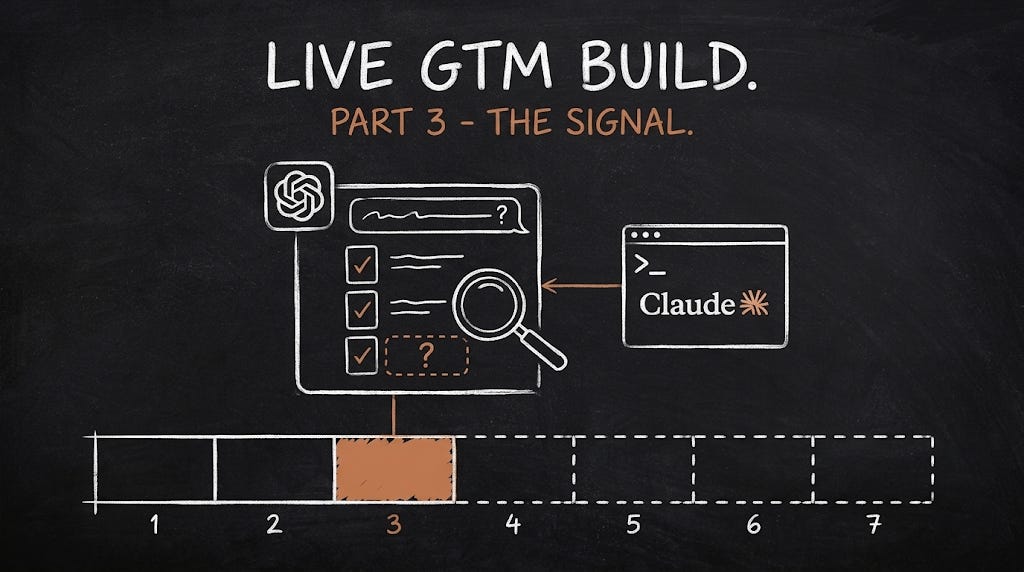
This is part 3 of the build. A new part at each phase, with the numbers, good or bad.
🗺️ The build in 7 phases
Phase 3: THE SIGNAL
Phase 4: THE COPY AND THE PAGES
Phase 5: LAUNCH AND FIRST SIGNALS
Phase 6: RUN AND FIX
Phase 7: RESULTS AND THE VERDICT
This part covers phase 3.
🏢 Quick recap: the client
A remote ecommerce marketing agency, around 60 people, selling retention services to Shopify brands.
Cold email had been switched off for a year, after 2 expensive tries that didn’t work.
The founder’s brief: “I just want to avoid very expensive tests.”
📭 The offer everyone sends
When the agency looked back at why their old outbound failed, the first reason was the offer.
They’d sent a free email and SMS audit.
So does almost every agency that sells to Shopify brands. It’s the most pitched offer in ecommerce.
The inboxes we were about to write to had already seen our pitch, hundreds of times, from people who sounded just like us.
Better copy doesn’t fix that. You need a different reason to write.
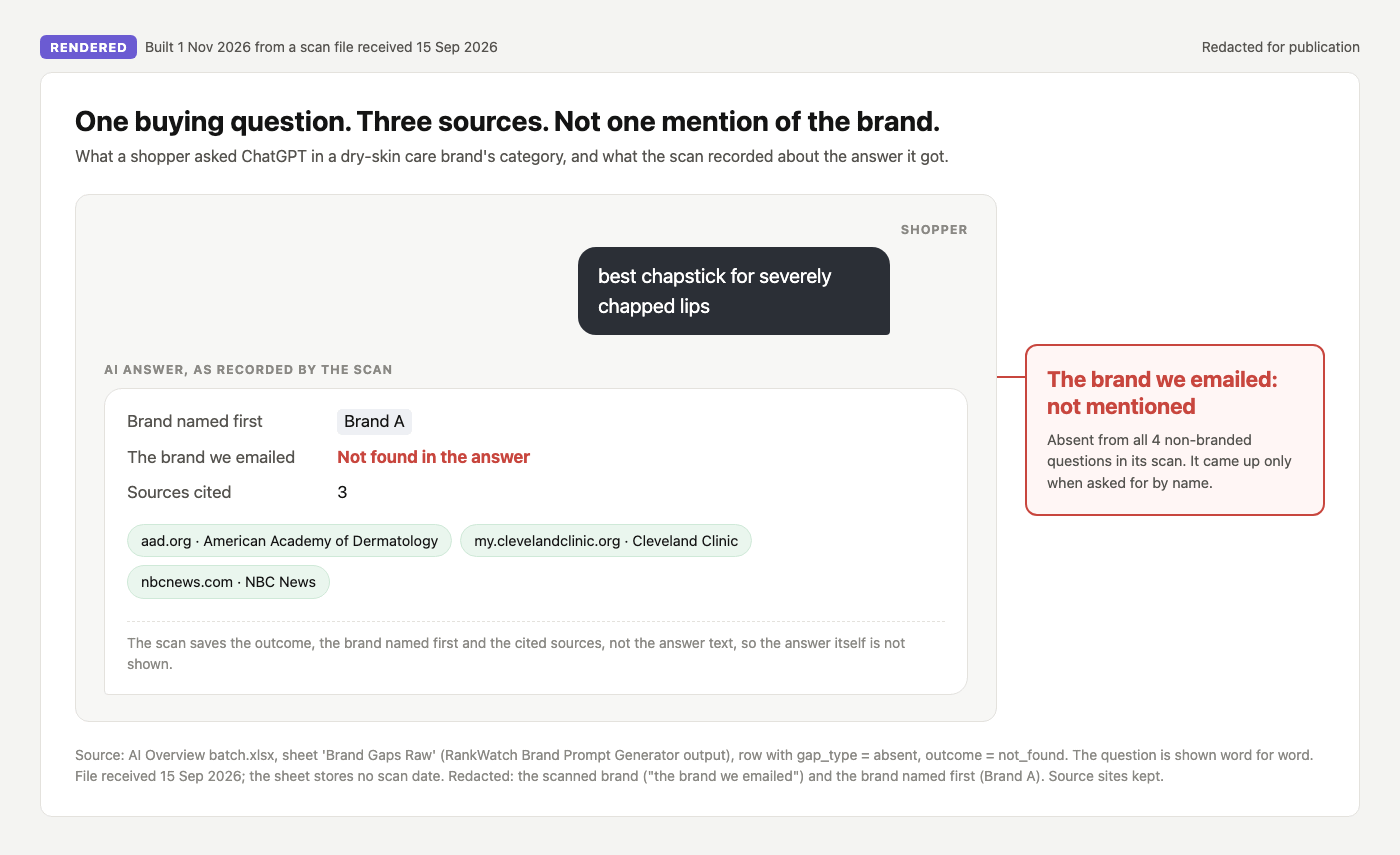
The signal: their own ChatGPT result
Shoppers now ask ChatGPT, Perplexity and Gemini what to buy.
Plenty of brands never show up in the answer, while their competitors and review sites do.
So the signal became each brand’s own result:
I asked ChatGPT a buying question from your category. These three sources came up. You weren’t one of them.
Three things made it work:
Nobody else was sending it. AI search visibility wasn’t a cold email offer yet
It proves itself. The prospect can type the question into ChatGPT and check in ten seconds
It’s about them. The email can’t be sent without the research behind it
Rather than a timing signal, this is a relevance signal.
It shows a brand has a gap, not that they’re ready to fix it this month.
Whether that’s enough to book meetings at scale is what part 7 will answer.
🧰 Tech stack for this phase
The scanner: RankWatch’s Brand Prompt Generator, 5 buying questions per brand, run by the client’s automation lead. About $360 per 2,400 domains, so roughly 15 cents a brand
File sharing: Google Drive, connected to Claude, to pass scan files back and forth
Team chat: Slack, where every batch got posted
Planning: a Claude project, with one chat just for the scan spec
Claude Code: checking every result before it reached the copy
📍 Phase 3: The signal
Seven steps, from “why does nobody reply?” to results you can trust in an email:
Find a signal nobody else is sending
Write the spec before you pick a tool
Design the output first
Test scanners on 250 domains
Only scan the brands that fit
Run it in batches, and keep it fresh
Check every result before it reaches an email
Below: every step in full, with what we did, what I’d do differently, and the prompts.
Inside:
The prompt that finds a signal your market hasn’t seen yet
The spec prompt that tells any scanner exactly what to return
The 5 fields every scan returned, and the email each one feeds
Why two scanners failed before the third worked
One batch, from 1,500 domains sent to 1,272 results we could use
Download: the signal-check skill, for any research you put in front of a prospect