


Welcome back to Founder’s GTM⚡ with lean strategies for business owners to win clients predictably.
We just wrapped the cold email series (simple 3-step sequence → meetings). Now we’re shifting to LinkedIn, because when your buyers are active there, nothing beats it for creating pipeline.
Instead of posting into the void, you will be running a system that generates real opportunities directly.
Refresher
Email campaigns gave you a predictable base. LinkedIn extends it where your ICP already shows intent publicly. Let’s fix the first mistake most people make: using the newsfeed as an entry point. By the end, you’ll have a clean way to log in, ignore the noise, and show up where buyers are already paying attention..
1. The feed is a trap
The first move on LinkedIn actually isn’t posting but simply escaping the feed.
Everyone who has tried has fallen into it at some point. You log in, scroll the newsfeed, drop a few comments, maybe like a post or two. It feels productive. But hours later, your pipeline is still empty.
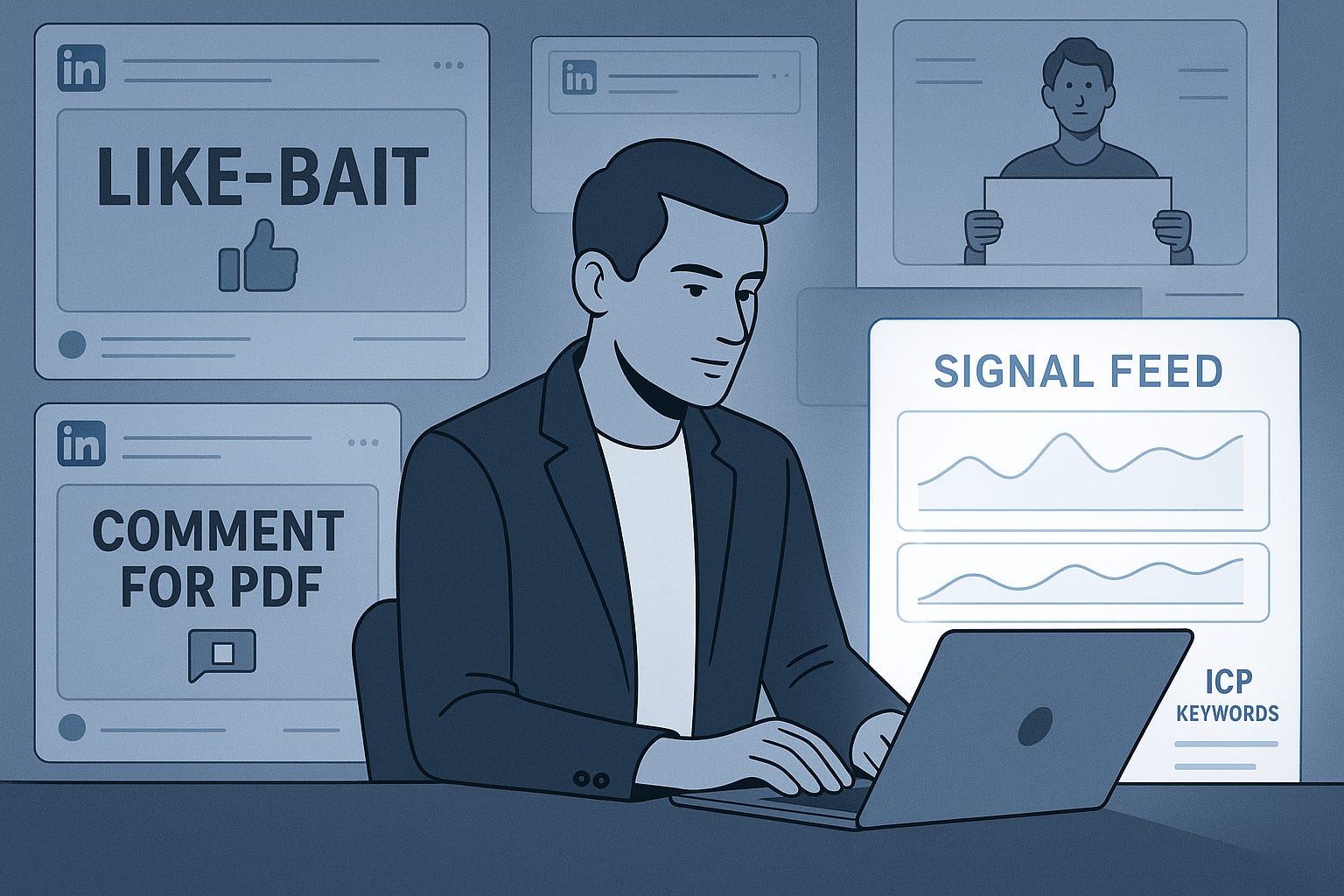
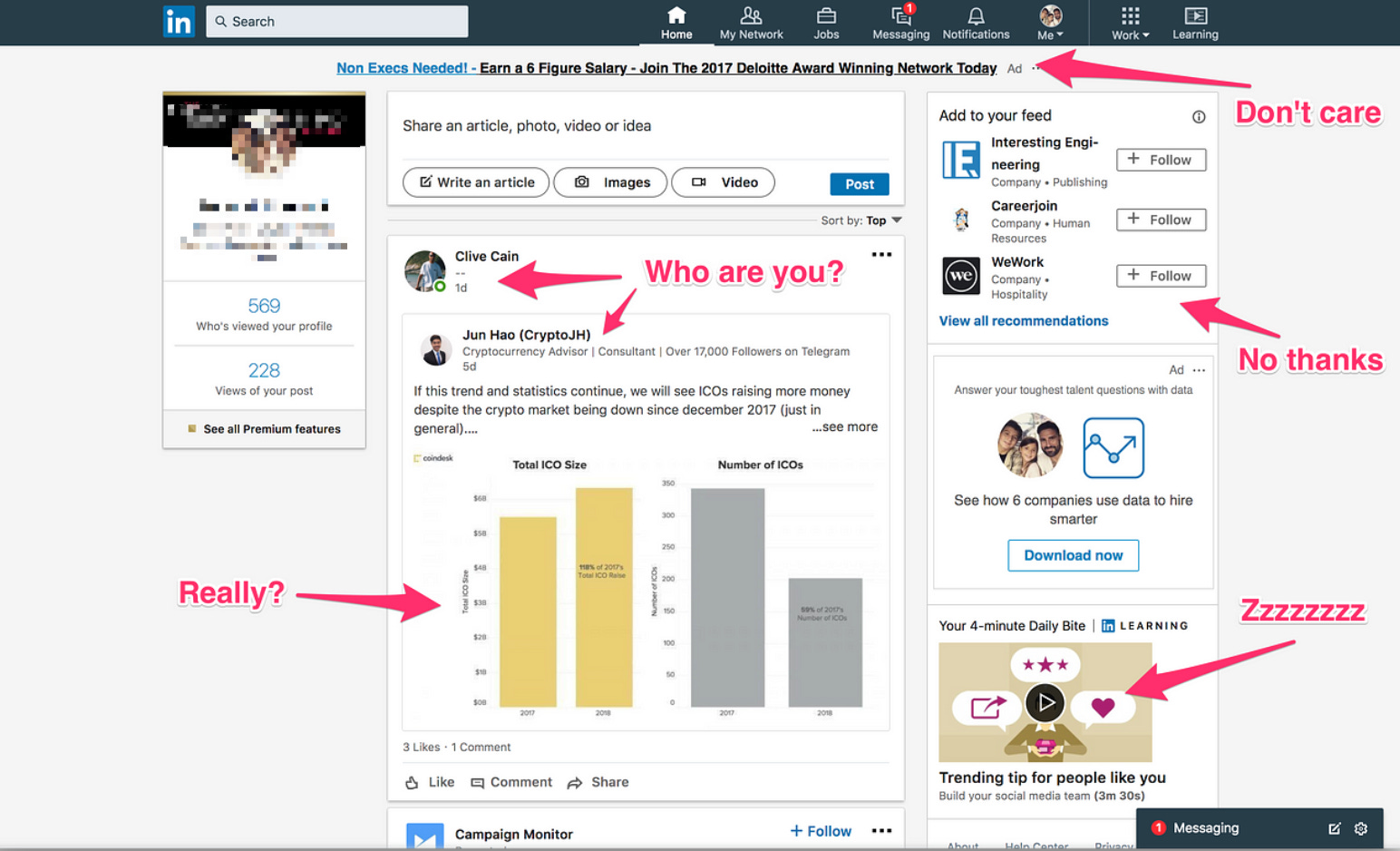
The feed is engineered to keep you scrolling, not finding clients. Engagement pods, recycled takes, and viral bait make you feel productive while your pipeline stands still.
If you use the feed as your entry point, you’re outsourcing GTM to an algorithm that doesn’t care about your revenue. The algorithm rewards engagement bait:
Broetry posts with three words per line.
“Comment GUIDE for the PDF.”
People holding signs with generic advice.
2. Bypass the noise
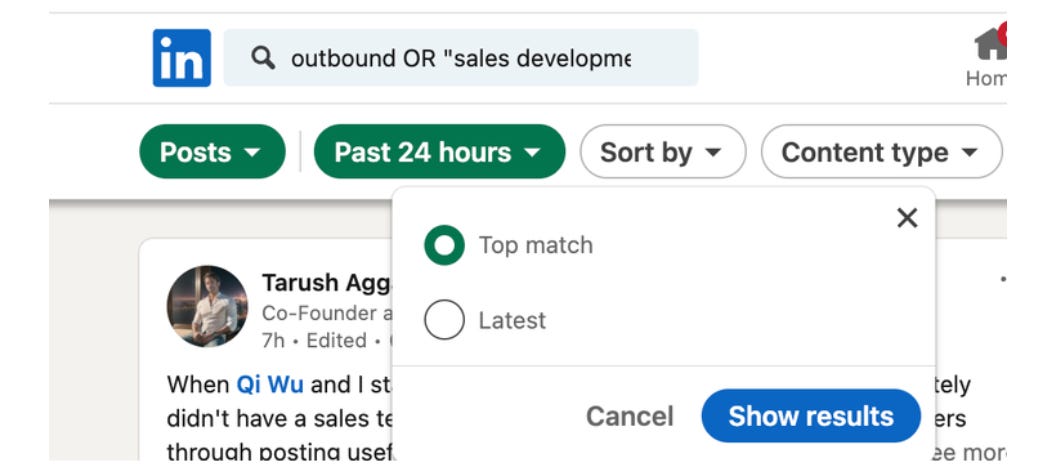
Here’s the fix: replace the distracting feed by building your own entry point. Every time you log in, skip the homepage and go straight to signals:
Saved searches of posts with keywords tied directly to your ICP’s problems.
Boolean filters to surface discussions your ideal clients are having in real time.
Bookmarks for custom feeds that only show relevant activity.
This creates your own signal feed instead of playing algorithm roulette. Instead of wasting hours on fluff, you can directly join conversations that are already happening around the pain points you solve.
Take one agency owner I worked with. She thought she had a “visibility problem.” Three posts a week, hours of feed engagement, 100+ likes here and there. Looked fine from the outside. But pipeline? Zero.
We rebuilt her LinkedIn motion around a custom feed: searches like “retention marketing,” “ROAS” “email” . Every day, she spent 20 minutes engaging in those threads with sharp insights that added something useful.
The result:
Connection acceptance went from 40% to 61%.
Reply rate on DMs from 14% to 31%
Within 4 weeks, 5 meetings directly tied to those interactions.
What changed: same time, new entry point. From algorithm‑driven visibility to signal‑driven relevance.
3. Befriend the big dogs
Escaping the feed doesn’t mean ignoring LinkedIn, but showing up where influence already exists. Every market has a handful of voices whose posts spark real discussion and carry weight with decision makers. That’s where you want to be seen.
Pick 5–10 of these leaders - no direct competitors - and turn on notifications (hit the 🔔) so you can join the conversation early. When you engage, add signal: a data point, a short example, or an angle they missed. “Great post” adds nothing.
Once you’ve left a few sharp comments, take it private. Reference the post and extend the conversation with one concrete idea. This isn’t flattery but simply positioning. Done well, you shift from “random commenter” to someone they respect.
The real upside here is relationships. Bring mutual value: an intro, a perspective, or hands-on help. When you do this consistently, two things happen:
Their reach starts compounding in your favour. Their audience, the same one you want to reach, now sees your name regularly.
You start building relationships that open doors beyond likes and comments: collaborations, introductions, even partnerships.
That’s how you borrow the stage of the big voices without becoming another fanboy in their comments.

Bringing it together
Scrolling the feed, chasing likes, or firing off generic connection requests all feel like work, but none of it brings you closer to winning clients.
The shift is simple but non-negotiable: stop playing LinkedIn’s game and start running your own. That means three things:
Ignore the algorithmic feed.
Enter through saved searches and alerts.
Borrow reach from the few voices who already hold your buyers’ attention with credible comments.
Run this 20 minutes a day. Instead of trying to be “visible” or “active”, you’ll be engineering relevance.
When you cut the noise and consistently show up where your prospects are already paying attention, your LinkedIn motion stops looking like random posting and starts behaving like a repeatable GTM system.
What’s next
That’s all for today. This first step was about discipline. Without this foundation, every other tactic is wasted motion.
In the next edition, we’ll shift from escaping noise to leveraging it. You’ll see how to join more conversations that already have attention, position yourself alongside the people your market listens to, and turn visibility into pipeline instead of vanity.
By the end of this series, you won’t be just “active” on LinkedIn, but running it as a predictable GTM channel.
Until then,
Jasper
♻️ If you found this helpful, forward this email to a friend.
⚡ Book your free Outbound Optimiser🛠️ to diagnose your GTM and get actionable, tailored advice.