

Eric Nowoslawski runs Growth Engine X, one of the most successful lead generation agencies out there.
52 concurrent clients. Notion, Intercom, Instantly, Clay, Secureframe.
8 million cold emails a month.
Last week he shared that Grok Bot doubled the leads his team was getting in a week for a client.
Then he said this: “replacing my daily Claude Code use.”
You might think : “Wow wait, didn’t Claude Code just ‘replace’ Clay and now Grok Bot replaces Claude Code?”

What Grok Bot actually is
Not Grok. Grok is the chatbot: you ask, it answers.
Grok Bot launched 11 August from SpaceXAI, the group formed after SpaceX bought Cursor and merged with xAI. Early beta.
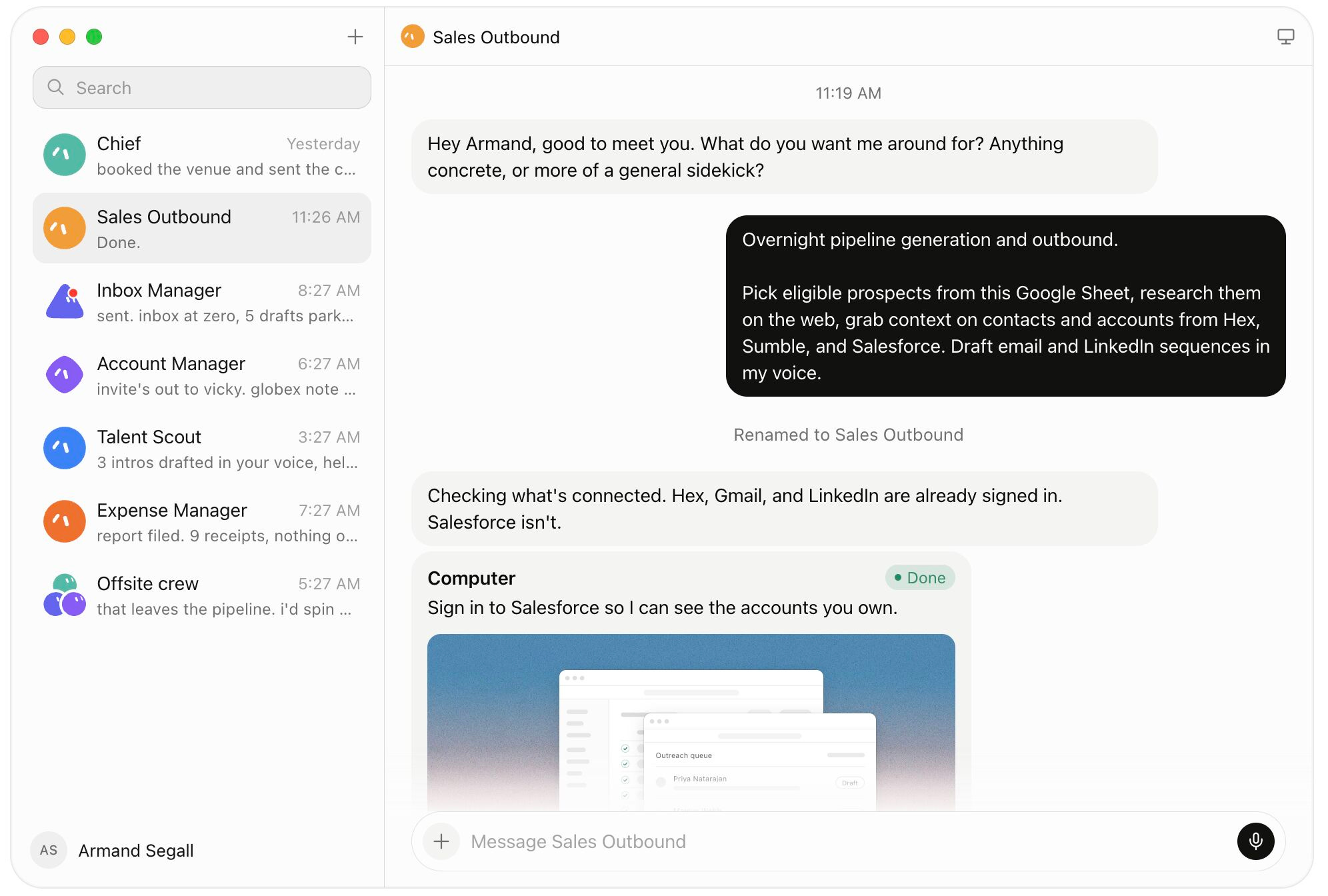
Each bot gets its own computer in the cloud.
You sign it into your tools once, then it works across your apps the way you would, and comes back only when something needs approving.
The line that matters for GTM is theirs: it works “including platforms with no clean API or MCP.”
The difference with Claude Code is that Claude reaches tools through MCP connections, which someone has to have built first.
Grok Bot logs into the website like a person. Vendor portals, ad managers, old ops tools, anything with a login.
It also learns differently. No config file. You ask it to watch while you do a job once, and it saves the steps as a routine.
⚡ Why GTM Engineers like it so much
The reason GTM Engineers like Eric love it is more about speed than autonomy.
Speed of setup.
Speed of response.
Speed of scheduling a task.
His words: “the closest I’ve felt to having a real coworker from these agents.”
A few specifics worth knowing:
Usage is generous. Heavy daily use barely dents the allowance, which corrects the “expensive beta” framing, including mine.
The API key handling is seriously good. Most agent tools make you either fiddle with keys or hand one straight to the model. Grok Bot brings up a card you drop the key into, and the model never sees it. That answers the credential worry I flagged earlier.
It reaches your own machine too, not just the cloud one, so anything built locally in Cursor or Codex gets picked up.
Plugins handle OAuth for tools that are usually painful to connect, Gmail and Drive included.
You can run it from your phone.
“Replacing my daily Claude Code use”
Worth sitting with, because Eric is not wrong about the speed, and he’s using both at a scale most of us aren’t.
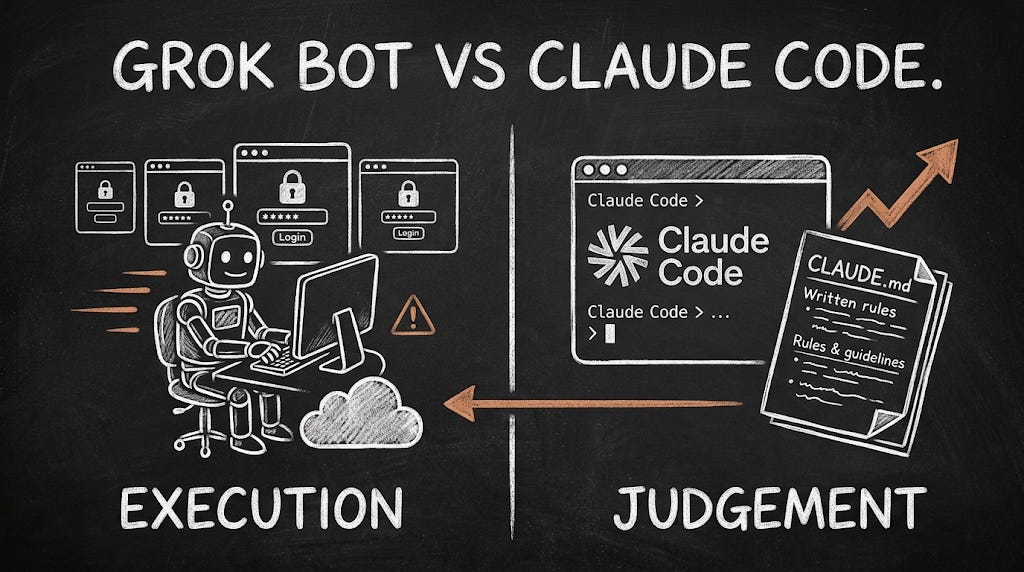
What’s been replaced is the execution layer, the running of jobs.
That’s a fair fight and Grok Bot may well win it, especially at agency volume.
What doesn’t move is what’s written down.
The CLAUDE.md that encodes who you sell to, which signals mean someone’s ready, what you never say.
That’s judgment in a file you own, and it stays yours whatever runs it next.
But I’d be overstating my case if I claimed these tools don’t compete.
For the day-to-day work of getting jobs done, they clearly do now.
So: try it. The question is what you hand it first, and how you’d know it went wrong before the damage lands.
Today, I will break down exactly:
The first job to give it. The one mechanical task that tells you within an hour whether this thing checks its work or just acts. Get this wrong and you find out on live prospects.
The audit prompt. Copy, paste, run it today. Every domain and inbox, every break ranked by what it’s costing you right now, with a step that forces the bot to show its work so you can verify each flag yourself in under a minute.
The standing routine. The permanent guardrail to install before it touches a single prospect. Draft only, evidence rule, skip-list check, and the report section that makes an agent auditable instead of confidently wrong.
The three failure signs. What goes wrong before real damage lands, and the exact moment to pull scope back.
The per-client bot pattern. The idea from Eric’s post nobody’s talking about, and the reason he can run this across 52 clients without the context bleeding between them.
Let’s dive in.