


Hey and welcome to another edition of Founder-Led Outbound.
Last week, we saw how to structure your go-to-market strategy and know exactly who to target, and why they would care. If you missed it, you can read it here.
Today, we tackle the next challenge: finding the right prospects and building a dynamic, enriched lead list.
Outbound often fails not because your targeting is off, but because your data is outdated.
Most businesses rely on three common methods for prospecting data: buying lists, accessing databases, or hiring agencies. But data lists are often low-quality, databases like ZoomInfo or Apollo run out fast, and agencies are costly yet rarely outperform in-house prospecting.
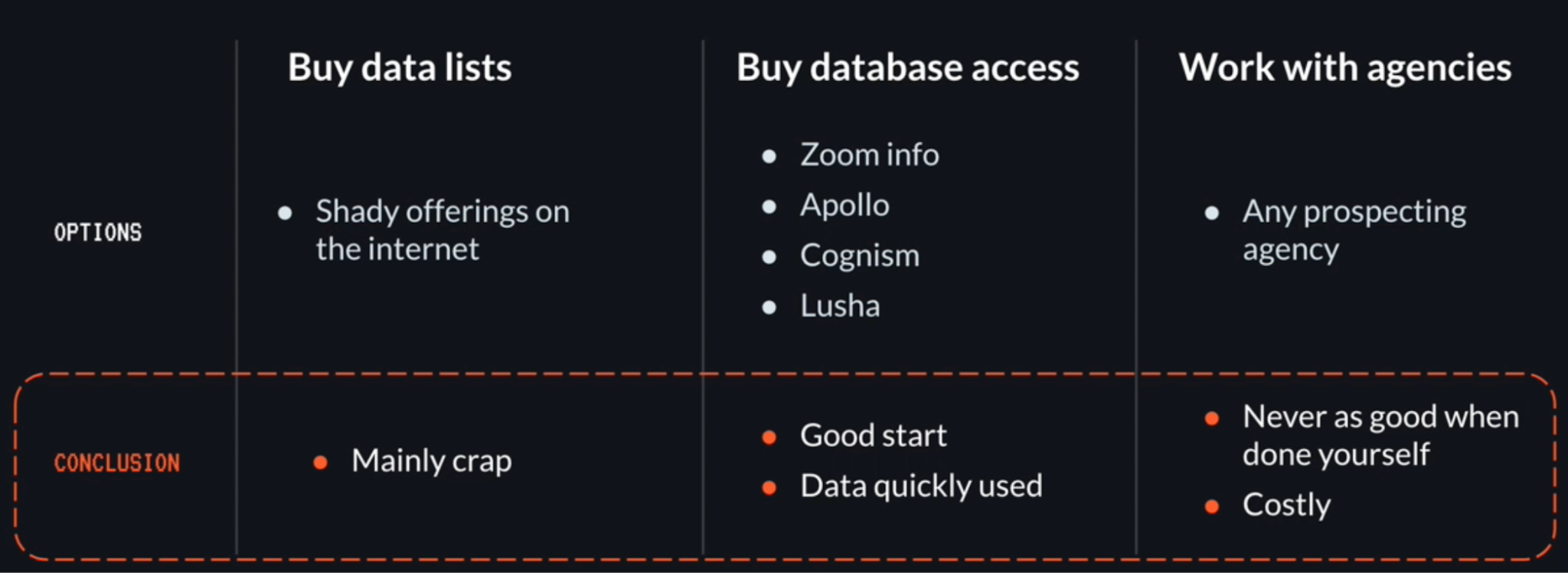
A better approach is to source data dynamically yourself, enrich it with context, and use tools like Clay to build high-quality lead lists that convert. In this edition, we break this process down, step by step.
3 Levels of Prospecting: Why Swimming & Diving Win
First, it’s important to understand how lead data has evolved. Years ago, simple filters like industry, company size, and job title were enough to generate leads. But that old-school “surfing” method - grabbing a static list and blasting cold emails - is outdated now.
Surfing Static Data 🏄
• What it is: Relying on basic filters like industry, company size, and job titles.
• Why it’s broken: No dynamic business context, resulting in low engagement because your offer might not be relevant when reaching out.
• Example: A data analytics startup pulls a list of every Head of Data at mid-sized companies without knowing if they even need a solution.
Instead, you should be:
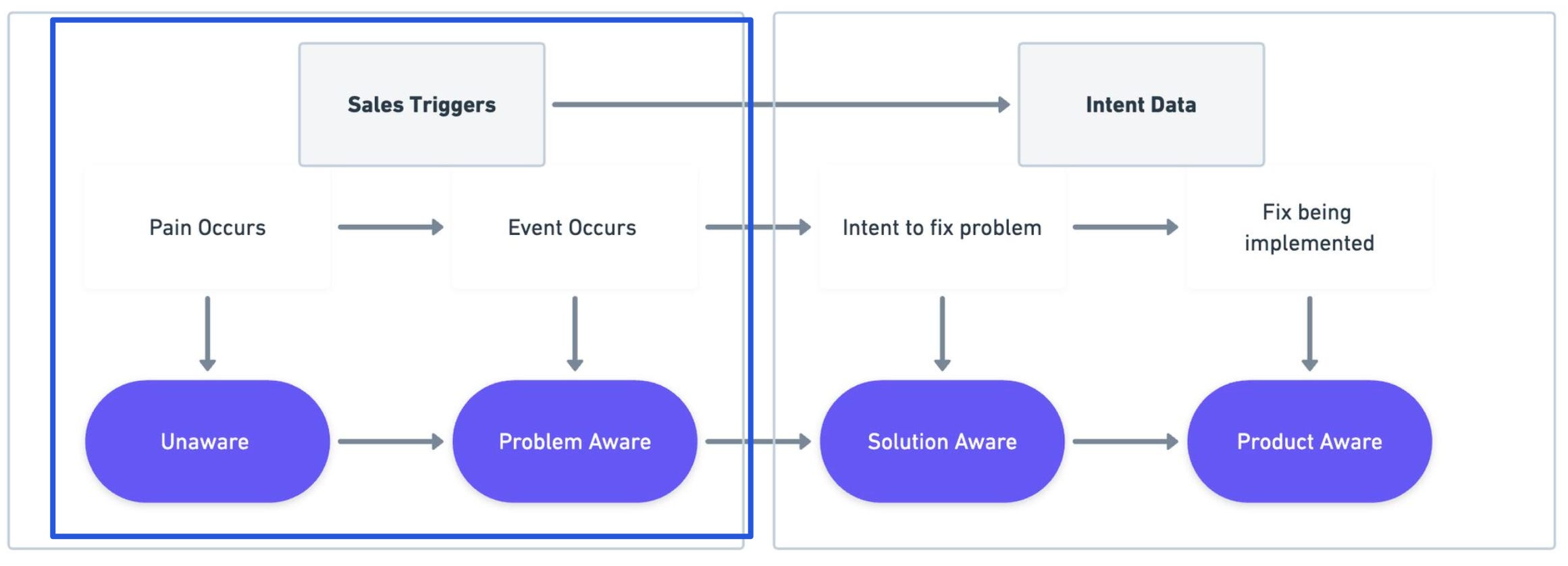
🏊🏼♂️ Swimming in contextual data that provides signals or trigger events (such as hiring trends and funding rounds) indicating a certain need.
, and/or
🤿 Diving deep into insider sales intelligence by engaging with multiple people in the company.
Swimming in Contextual Data 🏊🏼♂️
Swimming is about targeting prospects when they’re more likely to engage. Instead of guessing, you’re using actual business activity to make your outreach timely and relevant.
• How it works: You include dynamic data such as hiring trends, funding rounds, and tech stack changes.
• Why it works: It increases relevance and improves engagement.
• Example: Instead of contacting every Head of Data, you target companies that just raised Series A and are hiring data engineers, signalling that they might be scaling their data infrastructure.
This dynamic data comes from company signals or sales triggers, not to be confused with ‘buying intent’. They indicate change, not necessarily an active search for a solution. Your goal is to start the conversation, get engagement, and uncover if there’s a real need.
Diving To Deep Sales Intelligence 🤿
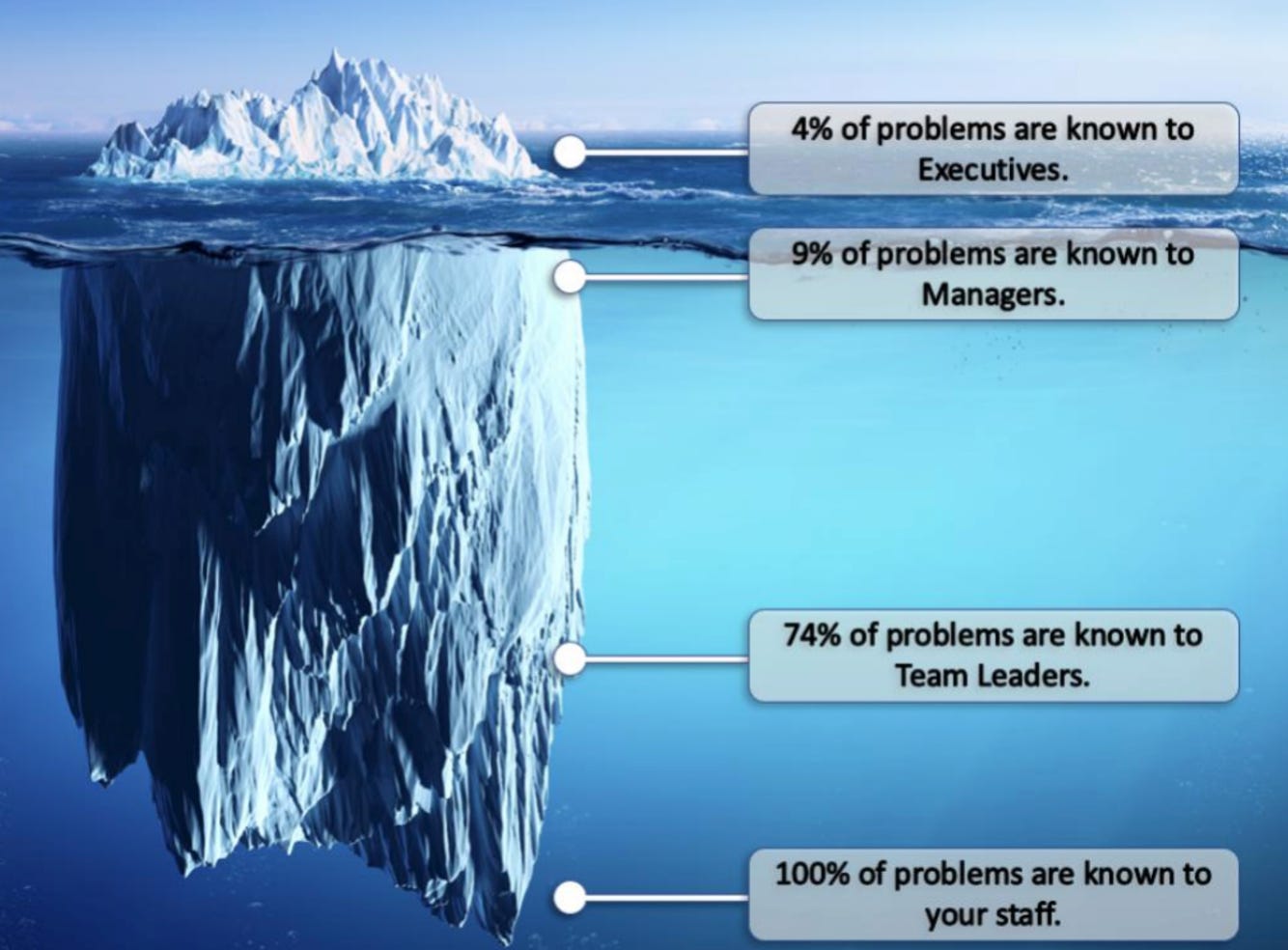
In enterprises, decision-makers usually only see about 10% of their company’s problems. What they see are the visible symptoms, like market performance, while the deeper issues causing those symptoms often go unnoticed, especially at the C-level.
To sell effectively in enterprise, you need deep sales intelligence: insights that don’t exist in public databases. This is the foundation of account-based sales, where influencing multiple stakeholders matters more than reaching one decision-maker.
• How it works: You talk to people in several layers of the organization, especially end-users. You ask about their challenges and problems.
• Why it works: Engaging with users and mid-level employees can uncover real pain points, information you can use when reaching out to decision-makers.
• Example: The seller talks with data engineers who explain that slow reporting is causing delays. Armed with this intel, they outreach to the VP of Data becomes highly persuasive:
“We found that your team is frustrated by slow reporting, which delays decision-making. We’ve spoken with your analysts, and they mentioned the need for automated reporting. Are you aware of this issue?”
Applying the 4 W’s of Targeting to Data Sourcing
Swimming and diving are key in adding context and relevance to your outreach. But knowing more about your prospects isn’t enough. You need a structured way to find, prioritize, and engage the right leads at scale.
That’s where the 4 W’s of Targeting (Who, Where, Why, When) come in. Let’s break down how to apply this framework to data sourcing, step by step.
Step 1: WHERE (Target Accounts)
Before reaching out to prospects, you need to make sure you’re targeting the right companies: the ones that actually fit your ICP and signal a certain need. This means sourcing fresh, dynamic data from the web.
Objective:
Identify companies that match your ICP based on signals, rather than relying on outdated lists.
Where to Find Target Companies:
Instead of pulling a generic list from a database, you can find accounts from various sources:
• Crunchbase / TechCrunch → Track companies that recently raised funding.
• LinkedIn Job Posts → Look for companies actively hiring for roles related to your solution.
• Trade Show & Conference Websites → Identify companies speaking at or attending industry events.
• Product Hunt → Find companies posting about product launches, hiring plans, or expansions.
Action:
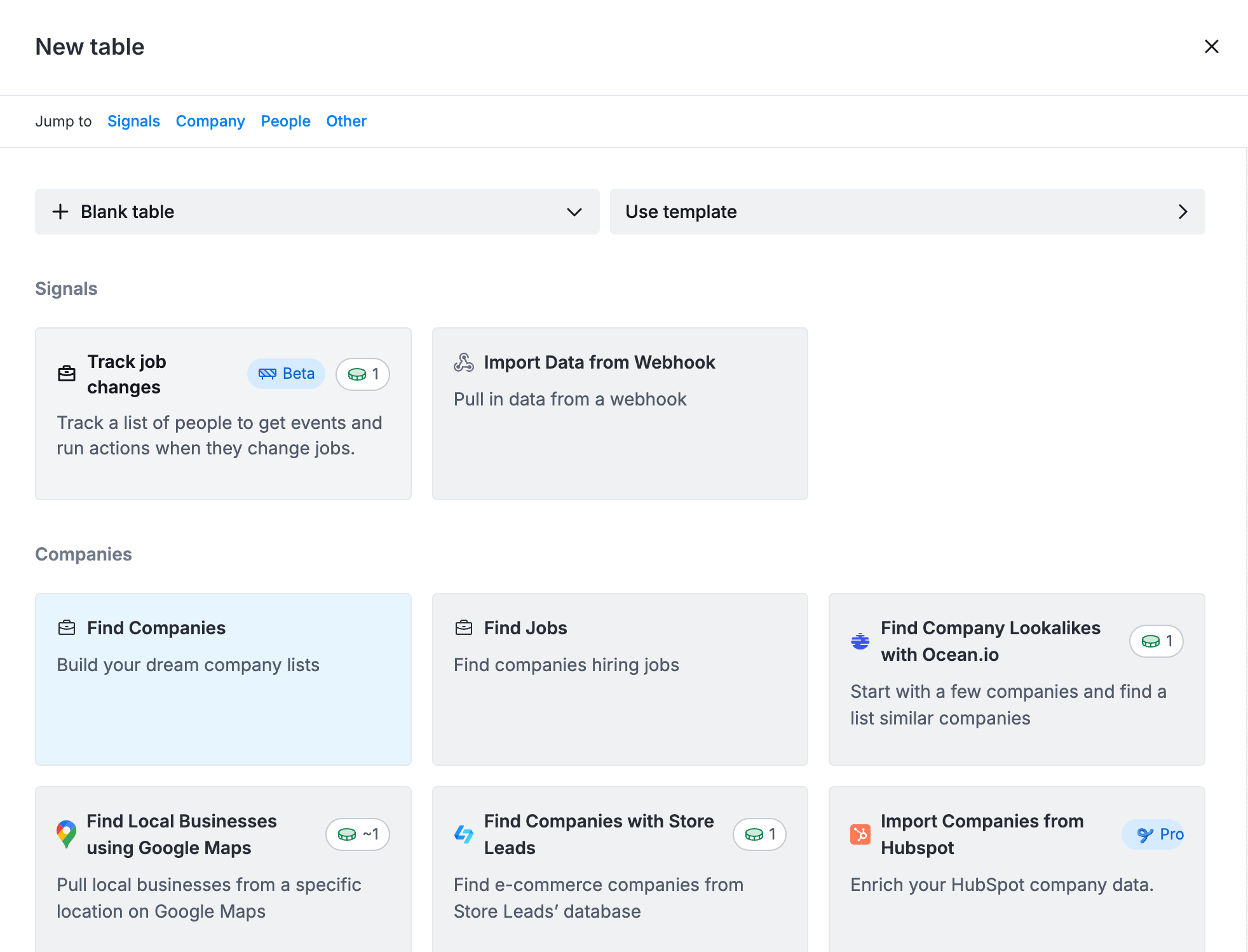
• Extract company names from these sources with a tool like Clay or Apify and save them into a Clay table or spreadsheet.
• Load them in Clay, where you’ll enrich the data to prioritize the most relevant accounts.
Clay is a platform that automates lead sourcing and enrichment by pulling data from over 100 sources, eliminating the need for manual research. It connects multiple data sources into one workflow, making sure your prospect list is always fresh and actionable.
If you’re completely new to Clay and don’t know where to start, have a look at their Clay university or watch Eric Nowoslawski’s Clay for beginners tutorial.
Step 2: WHY + WHEN (Target Account Signals)
Now that you have a list of companies, the next step is figuring out why they might need your solution and when they’re most likely to engage.
Objective:
Identify business events that signal a company might have a need and define the best timing for outreach. Instead of cold-pitching random companies, you’re prioritizing accounts based on their activity.
Key Triggers:
Some events signal when a company is facing new challenges or shifting priorities:
• Funding Rounds → New budgets, new growth targets, potential need for solutions.
• Hiring Trends → If a company is hiring for roles related to your solution, it signals a need.
• Leadership Changes → A new VP or Director often brings in new tools, strategies, and budgets.
How to Find These Triggers Efficiently:
Instead of manually tracking these changes, use Clay to automate enrichment and pull data from multiple sources in one place:
• Enrich each company with signals from multiple sources.
• Identify accounts that show multiple signals: those are your highest-priority targets.
Step 3: WHO (Buyer Persona)
Now that you’ve identified the right companies with signals, the next step is to target the right people within them.
Objective:
Identify the key decision-makers, influencers, and end-users within your target accounts: the people who are most likely to feel the pain you solve and have a role in the buying process.
Sources
Once you have your list of companies, enrich it with accurate contact data:
• Clay → Automatically pulls and enriches buyer persona data, including names, job titles, emails, and LinkedIn profiles.
• LinkedIn Sales Navigator → Use Sales Navigator if your prospects are active on LinkedIn (otherwise, Clay can handle this step).
Step 4: WHEN (Buyer Persona Signals)
This last step is the cherry on the cake, but also game-changer.
We’ve looked at account-level signals (funding, hiring trends) to find the right companies. Just like account-level signals, there are also persona-level or social signals that help you time outreach when prospects are most likely to engage.
Objective:
Define the best timing to reach out by tracking real-time social signals from your buyer personas. By tracking activity like job changes, social media posts, and activity on social networks, you can catch them when they’re already thinking about the problem you solve.
Sources:
You can track buyer persona activity manually by checking LinkedIn posts, job updates, and discussions, or you can automate the process using a tool like Trigify to get real-time alerts on key signals.
• Trigify → Automatically monitors LinkedIn activity, job changes, and engagement with relevant topics, so you don’t have to track them manually.
• Posts & Engagement on Social Platforms → Manually check for discussions where prospects talk about challenges your solution solves.
Action:
Use Trigify to track buyer personas for job changes, promotions, or engagement with relevant content. This step only applies to prospects who are active on social or professional networks like LinkedIn.
Wrapping It Up 💡
Outbound isn’t just blasting static lists. The key is reaching the right people at the right time with relevant context.
Here’s how to make that happen:
1️⃣ Stop surfing: Static lists don’t cut it anymore. Generic firmographic data alone will no longer get you the engagement you need.
2️⃣ Start swimming: Use real-time account-based and persona-based triggers (like hiring trends, funding rounds, and leadership changes) to refine your targeting.
3️⃣ Start diving (for enterprise sales): Talk to multiple people in the org, gather inside intel, and use that knowledge when reaching out to decision-makers.
4️⃣ Use the right tools:
• Clay → Enrich company and contact data dynamically.
• Sales Navigator → Use for LinkedIn-active personas.
• Trigify → Track social signals to identify the best timing for outreach to your persona.
Outbound stops being a guessing game when you know who to target, where to find them, why they should care, and when to reach out. Next week, we’ll cover how to turn these enriched leads into real engagement.
Quick Exercise 📝
Look at your last 20 leads, and ask yourself:
• Where did they come from?
• How many actually engaged?
• Are you still surfing when you should be swimming or diving?
Next Week: Turning Leads Into Engagement
We’ve sourced and enriched the right leads. The next step is knowing how to get them to engage.
Next week, we’ll cover:
The psychology behind why prospects engage (or ignore you).
How to write outbound messages that actually gets engagement.
And how to turn prospect data into messages that feel personal, not generic.
Until then,
Found this helpful?
📚 Check out my landing page for more resources
🩺 Get your free Outbound Health Check to diagnose your lead generation strategy and get actionable prospecting tips.
💬 Follow me on LinkedIn or X for daily tactics. Or just hit reply. I read every email.